Introduction
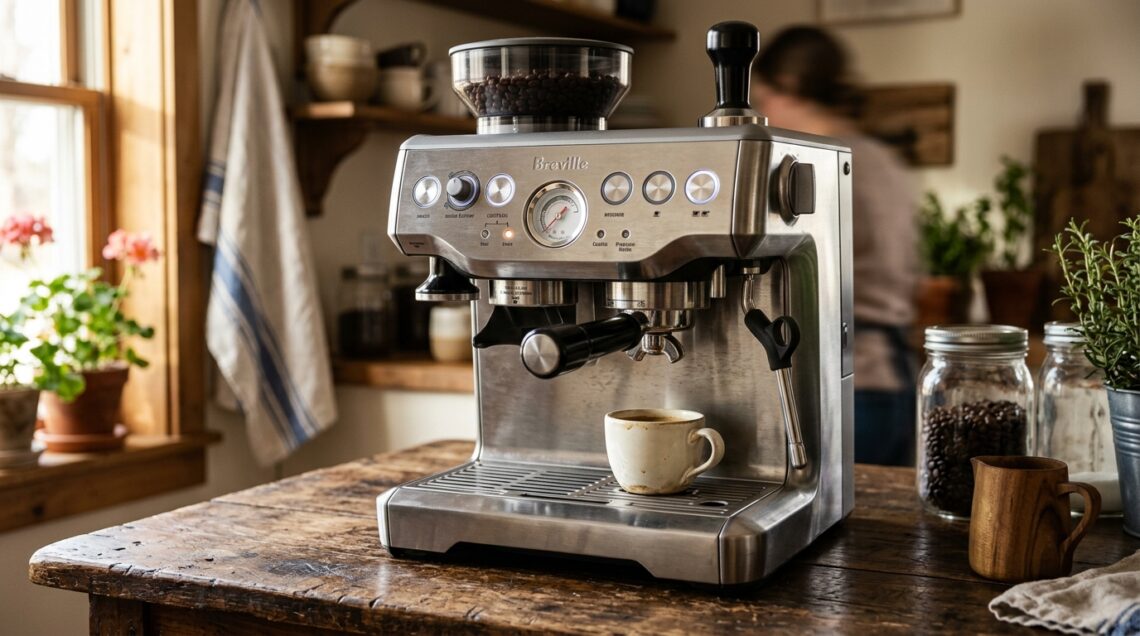
For a lot of home coffee drinkers, the leap from drip coffee to espresso can feel intimidating. Espresso machines are often sold separately from grinders, which means building a proper setup can mean juggling two appliances, two learning curves, and two sets of counter space requirements. The Breville Barista Express BES870XL was designed to simplify that equation by combining a burr grinder and a semi-automatic espresso machine into a single brushed stainless steel unit.
This article takes a practical, educational look at the BES870XL: what it includes, how the various components work together, who tends to get the most out of a machine like this, and what to think about before adding one to your kitchen. Rather than offering a verdict, the goal here is to give you the information you need to decide whether this type of machine fits the way you actually make and drink coffee.
A Quick Overview
The Barista Express is part of Breville’s Barista Series, a line of machines built around the idea of going from whole bean to extracted espresso in roughly a minute. It pairs an integrated conical burr grinder with a 15-bar Italian pump, a thermocoil heating system, and a set of manual tools — a tamper, a dosing funnel, and a steam wand — that let the user shape the final result rather than relying entirely on automation. It sits in a middle ground between fully manual espresso setups and the push-button super-automatic machines that grind, tamp, and brew without any input from the user.
That middle-ground positioning is really the defining characteristic of this machine, and it shapes almost everything else worth knowing about it.
Key Features
Integrated Conical Burr Grinder
The grinder is built directly into the machine’s housing, with a sealed bean hopper that holds roughly half a pound of beans. Because the grinder sits right above the portafilter cradle, beans can be ground and dosed directly into the filter basket without being transferred by hand, which cuts down on mess and helps keep grounds fresher at the moment of extraction. The grind size is adjustable across a wide range of settings, which matters because espresso requires a much finer, more consistent grind than drip coffee, and small changes in grind size can noticeably affect how a shot tastes.
Dose Control and Volumetric Programming
Alongside grind size, the machine allows the user to control how much coffee is dosed into the filter basket, and to program the volume of water used for a single or double shot. Once these settings are dialed in, the machine can reproduce them fairly consistently, which is useful for anyone who wants their morning shot to taste roughly the same as the one from the day before, without measuring everything from scratch each time.
Low-Pressure Pre-Infusion
Before full extraction pressure kicks in, the machine applies a gentler, lower-pressure phase that saturates the coffee puck. This pre-infusion step is intended to help water spread evenly through the grounds before the higher-pressure phase begins, which can contribute to a more balanced extraction and reduce the chances of water channeling through weak points in the puck.
Digital Temperature Control (PID)
Water temperature has a significant effect on how espresso extracts, and the BES870XL uses a PID (proportional-integral-derivative) controller paired with a thermocoil heating element to regulate that temperature. The thermocoil design heats water on demand rather than keeping a large boiler hot at all times, which allows the machine to move between brewing and steaming relatively quickly.
Manual Steam Wand
The machine includes a 360-degree swivel steam wand with a commercial-style design, intended for texturing milk by hand. Because it’s manual rather than automated, the quality of the microfoam depends on the technique of the person using it — positioning the wand, controlling air introduction, and managing temperature all play a role. This is one of the more hands-on aspects of the machine, and it doubles as a practical way to learn actual barista technique rather than relying on a machine to do it automatically.
Included Accessories
The BES870XL typically comes with a 54mm stainless steel portafilter, single and double-wall filter baskets, an integrated tamper housed in a magnetic dock, a dosing funnel attachment, a Razor-style dose-trimming tool for leveling grounds, a stainless steel milk jug, a water filter and filter holder, a cleaning disc and tablets, and a cleaning brush and Allen key. Having this range of tools included means a new user isn’t immediately shopping for separate accessories just to get started.
Water Reservoir and Hot Water Spout
A removable water tank with a filtration system sits at the back of the unit, and a dedicated hot water outlet is available separately from the espresso and steam functions, which can be used for Americanos, tea, or hot chocolate without needing to run a full brew cycle.
How It Can Be Used
Because the BES870XL is semi-automatic, it’s built around a workflow rather than a single button press. A typical sequence looks something like this: beans go into the hopper, the grinder is engaged (either by placing the portafilter into a cradle that triggers grinding, or manually), the ground coffee is leveled and tamped using the integrated tamper, the portafilter is locked into the group head, and the shot is pulled using either a single or double shot button. From there, the steam wand can be used to texture milk for drinks like lattes, cappuccinos, macchiatos, or flat whites, and the hot water spout can serve black coffee-adjacent drinks like Americanos.
This workflow lends itself naturally to experimentation. Someone who wants a straightforward daily shot can rely on the programmed volumetric settings and pressurized dual-wall baskets, which are more forgiving of grind and tamp inconsistencies. Someone who wants more control can switch to single-wall baskets, adjust grind size in smaller increments, and fine-tune dose and tamp pressure to chase a specific flavor profile — brighter and more acidic, or richer and more full-bodied, depending on the bean and roast.
Beyond straight espresso, the machine supports the general range of milk-based drinks that a café menu would typically offer, since the combination of a capable steam wand and adjustable shot volumes covers most standard espresso-based recipes.
There’s also a practical rhythm that tends to develop with daily use. Many owners settle into a routine where the bean hopper is topped off every few days rather than every single morning, since the sealed hopper helps preserve freshness for short stretches. The water tank, at roughly 67 ounces, is large enough that it typically doesn’t need refilling every day either, which cuts down on some of the friction that comes with smaller machines. Over time, most users also develop a personal reference point for grind size and dose that suits their favorite bean, and only need to make small adjustments when switching to a new roast or origin, since different beans and roast levels can behave differently under the same settings.
For anyone interested in exploring recipes beyond the basics, the machine’s manual controls also open the door to things like ristrettos (shorter, more concentrated shots), lungos (longer, more diluted shots), and layered drinks that rely on precise milk texture, such as a traditional macchiato. Because so much of the process is adjustable, it also functions reasonably well as a learning tool for anyone who wants to understand espresso extraction in general, not just operate one specific machine.
Who It May Be Suitable For
This type of machine tends to appeal to a fairly specific group of coffee drinkers:
People moving up from pod machines or drip coffee makers who want more control over flavor. The BES870XL offers a genuine step up in customization — grind size, dose, water temperature, and shot volume are all adjustable — without requiring a separate grinder purchase.
Households that drink espresso-based beverages regularly. Because the machine involves a short but real routine (grinding, tamping, pulling a shot, steaming milk), it tends to make more sense for people who are making coffee drinks often enough to justify the extra few minutes per cup, rather than only occasionally.
People who enjoy the process, not just the result. Learning to dial in a grind, manage tamp pressure, and texture milk by hand is part of the experience with this machine. Someone who wants zero-effort, one-touch espresso may find a super-automatic machine (which grinds, tamps, and brews with no manual steps) a better fit.
Beginners willing to spend some time learning. The dual-wall pressurized baskets that come with the machine are specifically designed to be more forgiving for newcomers, effectively creating consistent pressure even if the grind or tamp isn’t perfect. That said, getting comfortable with the full range of settings — and understanding how grind size, dose, and tamp interact — usually takes some practice over the first several uses.
Important Things to Consider
It is not a super-automatic machine. Some shoppers expect a single-button experience from an all-in-one espresso machine, but the BES870XL requires manual tamping and manual milk steaming. If a completely hands-off experience is the priority, a bean-to-cup super-automatic machine would be a more direct fit.
Regular maintenance matters. Like most espresso machines, this one benefits from routine cleaning — flushing the group head, periodically backflushing with the included cleaning disc and tablets, wiping down the steam wand after each use, and descaling based on local water hardness. Skipping maintenance over time can affect both taste and performance.
Counter space and clearance. With the bean hopper, portafilter cradle, and steam wand, this is a moderately sized appliance, and it also needs enough vertical clearance to remove and refill the water tank and bean hopper comfortably.
Learning curve for the finer details. While the pressurized baskets make early results forgiving, getting truly consistent, dialed-in shots — especially with single-wall baskets — takes some trial and error with grind size, dose weight, and tamp pressure. This is a normal part of the learning process with any semi-automatic machine, not a defect specific to this model.
Water quality. Because the water reservoir and internal components are affected by mineral buildup over time, using the included water filter and staying on top of descaling can help maintain consistent performance.
It’s a countertop investment, not just a purchase. Beyond the machine itself, ongoing costs include coffee beans (fresh, ideally recently roasted, since flavor is more noticeable in espresso than in drip coffee), filtered water or replacement filters, and occasional descaling solution.
Noise and warm-up time are part of the daily routine. The grinder, like most burr grinders, produces a noticeable sound for the few seconds it takes to dose a shot, which is worth keeping in mind for anyone brewing early in the morning in a shared living space. On the other hand, the thermocoil heating system is designed to reach brewing temperature relatively quickly after being switched on, so the wait before that first shot tends to be shorter than with machines that rely on a large traditional boiler.
Bean freshness has a bigger impact than with drip coffee. Because the grinder works with whatever is in the hopper, the quality and freshness of the beans used will noticeably affect the final cup. Espresso tends to be less forgiving of stale or low-quality beans than drip coffee, so many owners find it worthwhile to source freshly roasted beans in smaller quantities rather than buying large bags that sit for weeks.
Comparison of General Categories
Rather than comparing specific competing products, it’s useful to understand where a machine like the BES870XL sits among the broader categories of home espresso equipment:
Manual lever or fully manual machines put nearly every variable in the user’s hands, including pressure profiling in some cases. These tend to offer the most control but also demand the steepest learning curve and typically don’t include an integrated grinder.
Semi-automatic machines with a separate grinder function similarly to the BES870XL in terms of the brewing process itself, but require purchasing and finding space for a standalone grinder. This can offer more flexibility in grinder choice but adds cost and counter space requirements.
All-in-one semi-automatic machines with integrated grinders — the category the BES870XL belongs to — combine grinding and brewing into a single footprint. This tends to be a practical middle ground: less counter space and often lower total cost than buying two separate high-quality appliances, while still preserving manual control over tamping, dosing, and milk steaming.
Super-automatic (bean-to-cup) machines automate grinding, tamping, and often milk frothing, typically at the touch of a button. These prioritize convenience and consistency with minimal hands-on involvement, but usually offer less room for the kind of fine manual adjustment that hobbyist baristas look for, and they tend to be positioned at a higher price point for comparable build quality.
Where someone lands among these categories usually comes down to how much hands-on involvement they want in the process, versus how much they’d prefer the machine to handle on its own.
Frequently Asked Questions
Does the BES870XL grind coffee automatically, or does it need to be done separately? Grinding is built into the machine. Beans go into the sealed hopper, and the grinder doses ground coffee directly into the portafilter, either automatically when the portafilter is placed in the cradle or through a manual override.
Can this machine make drinks other than plain espresso? Yes. Because it includes a manual steam wand for milk texturing and a separate hot water spout, it can be used for lattes, cappuccinos, macchiatos, flat whites, Americanos, and similar espresso-based drinks.
Is it beginner-friendly? It’s generally considered approachable for beginners, largely because it includes pressurized dual-wall filter baskets that are more forgiving of grind and tamp inconsistencies while someone is still learning. That said, some time spent understanding grind size, dosing, and tamping is typically part of getting comfortable with the machine.
Does it require special maintenance? Like most espresso machines, it benefits from regular cleaning of the group head and steam wand, periodic backflushing using the included cleaning disc and tablets, and descaling based on water hardness in your area. The included water filter can help reduce mineral buildup between descaling sessions.
What size portafilter does it use, and does that matter? It uses a 54mm portafilter, which is a relatively standard size in the specialty coffee world. Some aftermarket accessories, such as bottomless portafilters or certain pucking screens, are designed around this size, which can be worth knowing if you plan to expand your setup down the road.
How much space does it need on a counter? It’s a mid-sized machine due to the combination of grinder, water tank, and steam wand, so it’s worth measuring available counter space and vertical clearance (for refilling the bean hopper and water tank) before purchasing.
Can pre-ground coffee be used instead of whole beans? Yes, most machines in this category allow the grinder to be bypassed so pre-ground coffee can be dosed directly into the portafilter. That said, part of the appeal of an integrated grinder is grinding beans immediately before extraction, since coffee tends to lose aromatic complexity fairly quickly once it’s ground.
Is it difficult to switch between single and double shots? Switching is generally straightforward, since the machine includes separate filter baskets sized for single and double shots along with dedicated buttons for each. Once grind size and dose are set for a given basket, moving between the two mostly comes down to selecting the right basket and portafilter setting.
Conclusion
The Breville Barista Express BES870XL occupies a specific and fairly well-defined niche: an all-in-one machine for people who want real control over their espresso — grind size, dose, water temperature, and milk texture — without needing to buy and manage a separate grinder. It rewards a bit of patience and practice, particularly for anyone new to pulling shots or steaming milk by hand, but it also includes enough guided tools (pressurized baskets, volumetric programming, a dosing funnel) to make that learning curve more manageable than fully manual alternatives.
Whether it’s the right fit really comes down to how you drink coffee day to day: if espresso-based drinks are a regular part of your routine and you’re interested in the process as much as the result, this category of machine tends to be a good match. If you’re looking for the simplest possible one-touch experience, it may be worth comparing against super-automatic options as well.