Introduction
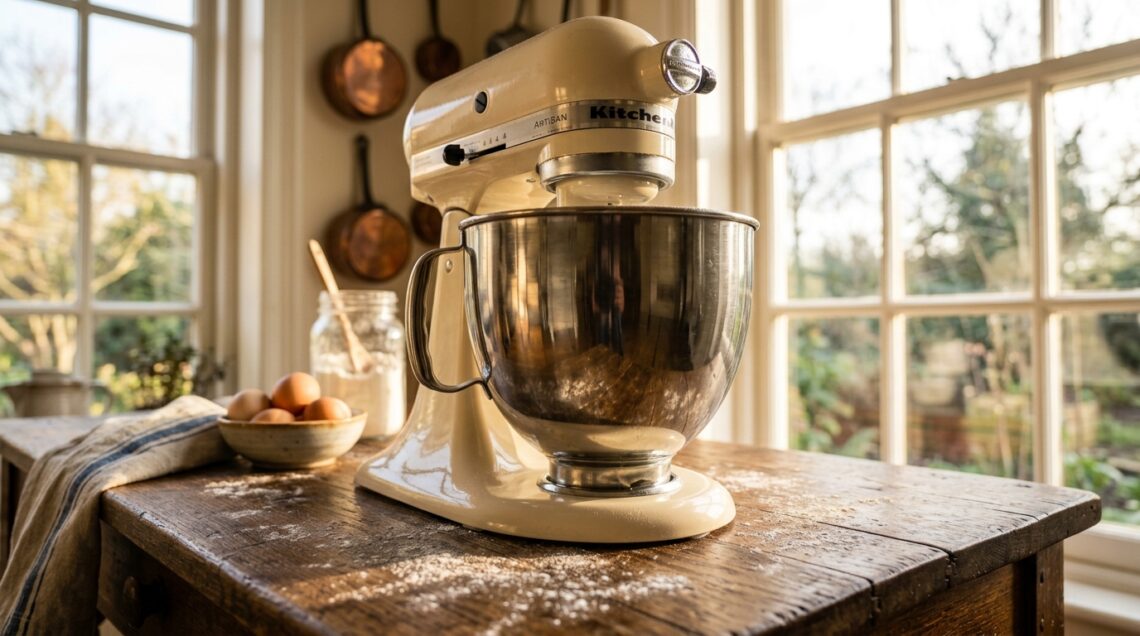
Stand mixers occupy an interesting spot in the kitchen. Unlike a lot of appliances that get used once or twice and then stashed in a cabinet, a good stand mixer tends to become a fixture on the counter, something reached for regularly rather than pulled out for special occasions only. The KitchenAid Artisan Series 5 Quart Tilt-Head Stand Mixer, model KSM150PS, is one of the more recognizable options in this category, known partly for its distinctive silhouette and partly for the sheer range of color finishes it comes in — including the Almond Cream shade covered here.
This article walks through what the KSM150PS actually offers: its design, its core functions, the kinds of tasks it tends to handle well, and the practical considerations worth thinking about before bringing one into a kitchen. The intent is to inform, not to persuade — so rather than declaring it the “best” anything, this piece focuses on giving you enough detail to judge for yourself whether it fits the way you cook and bake.
A Quick Overview
The KSM150PS belongs to KitchenAid’s Artisan line, which sits in the middle of the brand’s stand mixer lineup — more capable than the brand’s compact or classic tilt-head models, but smaller in bowl capacity than the bowl-lift mixers designed for very large batches. “Tilt-head” refers to the mechanism that lets the motor housing pivot upward, exposing the bowl and attachment hub for easier access, as opposed to bowl-lift designs where the bowl itself moves up and down along fixed posts.
This particular model includes a 5-quart stainless steel mixing bowl, a set of core mixing attachments, and a pouring shield, all built around a metal-bodied motor housing rather than a plastic one. It’s designed with home baking and cooking in mind, rather than commercial-volume production, though its capacity is generous enough to handle fairly large batches for a household appliance.
Key Features
5-Quart Stainless Steel Bowl
The mixing bowl holds 5 quarts, which KitchenAid states is enough to mix around nine dozen cookies in a single batch using the flat beater (based on a standard dough weight per cookie). The bowl is stainless steel, dishwasher-safe, and fitted with a handle, which makes it easier to lift, pour from, and carry to the sink or fridge once mixing is done.
Tilt-Head Design
Rather than lifting on a fixed frame, the mixer head tilts backward and locks into place, opening up the top of the bowl. This design tends to make it easier to add ingredients gradually, scrape down the sides, or swap attachments without needing to remove the bowl entirely. Once mixing needs to resume, the head locks back down into position.
10-Speed Motor
The mixer offers 10 speed settings, spanning from a slow “stir” speed intended for gentle folding or initial ingredient combination, up through higher speeds suited to whipping cream or egg whites. Having a wide speed range matters because different tasks call for different mixing intensities — bread dough generally needs slower, more consistent kneading, while whipped cream or meringue benefits from faster aeration.
59 Points of Contact
KitchenAid describes the mixing action as involving 59 touchpoints around the bowl, a reference to how the beater or whisk interacts with the bowl’s interior surface during rotation. The planetary mixing action — where the attachment spins on its own axis while also circling the bowl — is designed to incorporate ingredients from multiple angles rather than mixing in a single fixed path.
Included Attachments
The KSM150PS comes with a coated flat beater, a coated dough hook, a 6-wire whip, and a pouring shield. The flat beater is generally used for standard mixing tasks like cake batters or cookie dough. The dough hook is built for kneading yeasted bread and pizza dough. The 6-wire whip is intended for aerating tasks such as whipping cream or beating egg whites. The pouring shield fits around the top of the bowl and includes a chute, allowing ingredients to be added gradually while the mixer is running without as much risk of splatter or spill.
Metal Construction and Motor Housing
The mixer’s body is built primarily from metal rather than plastic, which contributes to its overall weight and is generally associated with a longer expected service life for household appliances of this type. This construction also supports the range of optional attachments described below.
Power Hub for Attachments
At the front of the motor housing is a power hub that can accept a range of optional attachments sold separately, such as pasta roller and cutter sets, food grinders, and other accessories. This turns the mixer into something closer to a small multi-function kitchen system, since the motor that powers mixing can also drive these add-ons, without requiring separate motorized appliances for each task.
Color Options
One of the more distinctive aspects of this product line is the sheer number of finish options available — more than 20 colors across the broader Artisan lineup, ranging from neutral tones like Almond Cream and White, to bolder options like Empire Red or Aqua Sky. This allows the mixer to function as a visible countertop appliance that can be matched to a kitchen’s existing color scheme rather than hidden away in storage.
How It Can Be Used
At its core, the KSM150PS is built around everyday mixing tasks: creaming butter and sugar for cookies or cakes, combining wet and dry ingredients for quick breads or muffins, whipping cream or egg whites for desserts and toppings, and kneading dough for bread, rolls, or pizza. Because the bowl capacity is relatively generous for a household mixer, it also tends to handle doubled recipes reasonably well, which can be useful for anyone baking for a larger household, a holiday gathering, or a bake sale.
The pouring shield tends to be particularly useful for recipes that involve gradually incorporating dry ingredients into a running mixer, such as adding flour a little at a time to a batter, or slowly streaming in melted butter or oil. Because it has a built-in chute, ingredients can be added without lifting the shield on and off repeatedly.
Beyond baking, the mixer can be used for tasks like shredding cooked meat (using the flat beater on a low speed), mixing meatloaf or meatball mixtures, or making mashed potatoes. The dough hook extends its usefulness into bread-making specifically, handling the repetitive kneading process that would otherwise be done by hand — a task that can take considerably longer and require more physical effort without a machine.
For anyone interested in expanding what the mixer can do, the power hub attachment system opens up additional possibilities. With optional attachments purchased separately, the same base unit can be used to make fresh pasta, grind meat or vegetables, stuff sausages, or juice fruit, depending on which accessories are added over time. This modularity means the mixer’s role in the kitchen can grow gradually rather than requiring every accessory to be purchased upfront.
Because the attachments and bowl are dishwasher-safe, cleanup after most tasks is relatively straightforward, though the motor housing itself should only be wiped down rather than submerged or placed in a dishwasher, as with most motorized kitchen equipment.
Who It May Be Suitable For
Home bakers who bake regularly, not just occasionally. Because of its price point relative to hand mixers, and its counter footprint, this type of mixer tends to make the most sense for people who bake often enough that hand-mixing would become a genuine time and effort burden — regular bread bakers, people who bake for larger families, or anyone who bakes as a consistent hobby.
People who want one appliance that can grow with their kitchen needs. The power hub attachment system means this mixer can serve a fairly narrow initial purpose — say, mixing cookie dough and cake batter — while leaving room to expand into pasta-making or meat grinding later, without needing to buy an entirely new appliance.
Anyone who values having appliances visible on the counter. Because it comes in a wide range of finishes and has a design that’s stayed largely consistent for decades, this mixer is often left out on the counter as a semi-permanent fixture rather than stored away, which is worth considering in terms of available counter space.
Bread bakers specifically. The dough hook attachment, combined with a motor built to handle the resistance of kneading, makes this a practical option for people who bake yeasted bread regularly and want to reduce the hands-on kneading time involved.
Those upgrading from a hand mixer. For anyone whose current setup is a basic hand mixer, moving to a stand mixer generally means being able to walk away from the bowl during mixing, work with heavier doughs that a hand mixer would struggle with, and mix larger batches without holding the appliance the entire time.
Important Things to Consider
Bowl capacity and batch size. While 5 quarts is generous for most household recipes, anyone regularly making very large batches — for a bakery-style operation, catering, or bulk meal prep — may want to compare this against bowl-lift models with larger capacities before deciding.
Counter space and weight. Because of its metal construction, this mixer has real heft to it, which is generally a sign of durability but also means it’s not the easiest appliance to move in and out of storage repeatedly. It tends to work best for kitchens that have a dedicated spot for it to live on the counter.
Tilt-head clearance. Because the head tilts upward rather than the bowl lifting on posts, there needs to be enough vertical clearance above the mixer — under a cabinet, for instance — for the head to open fully. This is worth checking against the specific spot where the mixer would be placed.
Attachments are sold separately. The base KSM150PS includes the flat beater, dough hook, whip, and pouring shield, but the broader ecosystem of pasta rollers, grinders, and other power-hub accessories are separate purchases. Anyone planning to use those features should factor in the additional cost and confirm compatibility with this specific model.
Speed and ingredient splatter at higher settings. As with most stand mixers, running at higher speeds without the pouring shield in place — or without gradually increasing speed from a lower setting — can result in ingredients splattering out of the bowl, particularly with thin batters or when adding dry ingredients like flour.
Maintenance is generally low but not zero. The mixer doesn’t require frequent maintenance, but attachments should be dried thoroughly after washing to avoid rust on parts like the coated beater or dough hook over time, and the motor housing benefits from being wiped down after use rather than left with dried batter or flour residue.
Warranty and long-term use. Stand mixers in this category are often kept for many years, sometimes passed down or used daily for a decade or more, so it’s worth checking current warranty terms and understanding what’s covered, since this can vary by retailer and by time of purchase.
Comparison of General Categories
Rather than comparing specific competing brands, it helps to understand where a mixer like the KSM150PS sits among the broader categories of mixing equipment:
Hand mixers are lightweight, inexpensive, and easy to store, making them a reasonable choice for occasional, lighter-duty mixing tasks. They generally struggle with dense doughs like bread, and require the user to hold the appliance and move it around the bowl throughout the mixing process.
Tilt-head stand mixers — the category the KSM150PS belongs to — offer hands-free mixing with easier access to the bowl for adding ingredients or attaching accessories, generally at a mid-range capacity suited to most home kitchens. This tends to be a practical balance between capability and counter footprint for households that bake regularly but don’t need commercial-scale volume.
Bowl-lift stand mixers typically offer larger bowl capacities and are often built for heavier, more frequent use, such as large-batch baking or semi-professional settings. They tend to be bulkier and can come at a higher price point, but offer more stability for very heavy doughs due to the way the bowl is supported on fixed posts rather than a tilting head.
Multi-function food processors with mixing capability prioritize versatility across chopping, pureeing, and mixing tasks in one unit, but generally aren’t designed for the same volume or intensity of dough-kneading as a dedicated stand mixer, and don’t offer the same planetary mixing action.
Where a specific kitchen or baker lands among these categories usually comes down to batch size needs, frequency of use, available counter and storage space, and whether attachment versatility (like pasta-making or grinding) is a priority.
Frequently Asked Questions
Can this mixer handle bread dough? Yes. It includes a dough hook attachment specifically designed for kneading yeasted doughs, and the motor is built to handle the resistance involved in that process. For very large or very dense bread batches, it’s worth checking the manufacturer’s recommended maximum dough capacity for this bowl size.
Is the bowl dishwasher-safe? Yes, the stainless steel bowl, along with the flat beater, dough hook, and whip attachments, are generally dishwasher-safe. The motor housing itself should not be submerged and should instead be wiped down with a damp cloth.
What is the pouring shield used for? The pouring shield fits over the top of the bowl and includes a chute opening, allowing ingredients to be added gradually while the mixer is running, which helps reduce splatter compared to adding ingredients directly into an open, spinning bowl.
Can this mixer be used for tasks beyond baking, like making pasta or grinding meat? The base model comes with attachments for standard mixing, whipping, and kneading. Additional capabilities like pasta rolling or meat grinding require separate, optional attachments that connect to the power hub on the front of the mixer.
How many speeds does it have, and what are they used for? It has 10 speed settings, ranging from a slow stir speed suited to gentle initial mixing or folding, up to higher speeds intended for whipping cream, beating egg whites, or other aeration-heavy tasks.
Does the color (such as Almond Cream) affect performance? No. The color finish is a cosmetic choice and does not affect the mixer’s mechanical performance, speed range, or bowl capacity, all of which remain consistent across the different finish options within this model line.
Is it difficult to switch between attachments? Switching attachments is generally straightforward with the tilt-head design, since tilting the head back exposes the attachment hub, and each attachment typically twists or locks into place without needing tools.
Conclusion
The KitchenAid Artisan Series 5 Quart Tilt-Head Stand Mixer (KSM150PS) represents a fairly well-established category of kitchen appliance: a mid-capacity, tilt-head stand mixer built around a metal motor housing, a stainless steel bowl, and a set of core attachments suited to everyday baking and mixing tasks. Its appeal tends to come from a combination of practical capability — handling doughs, batters, and whipped mixtures without requiring constant hands-on effort — and a design that many households are comfortable leaving out on the counter, especially given the range of available color finishes like Almond Cream.
Whether this particular mixer fits your kitchen really depends on how often you bake or cook dishes that benefit from machine mixing, how much counter and storage space is available, and whether the option to expand into pasta-making, grinding, or other attachment-based tasks down the line matters to you. For households that bake regularly or are looking to move beyond the limitations of a hand mixer, this category of appliance tends to be a practical fit; for more occasional use, it’s worth weighing against lighter-duty alternatives as well.