Introduction
Blenders occupy a wide spectrum, from inexpensive countertop units meant for the occasional smoothie to heavy-duty machines built to handle years of daily use across a wide range of ingredients. The Vitamix 5200 sits toward the higher-capability end of that spectrum. It’s one of the longer-running models in Vitamix’s lineup, and its basic design — a tall 64-ounce container, a set of tactile dial controls, and a powerful base motor — has stayed largely consistent for years, which is part of why it still comes up regularly in discussions about home blending equipment.
This article is meant to walk through what the 5200 actually is and does: how it’s built, what it’s generally used for, who tends to get the most value from a machine like this, and what’s worth thinking about before adding one to a kitchen. Instead of offering a verdict, the aim is to lay out the practical details so you can weigh them against your own cooking and blending habits.
A Quick Overview
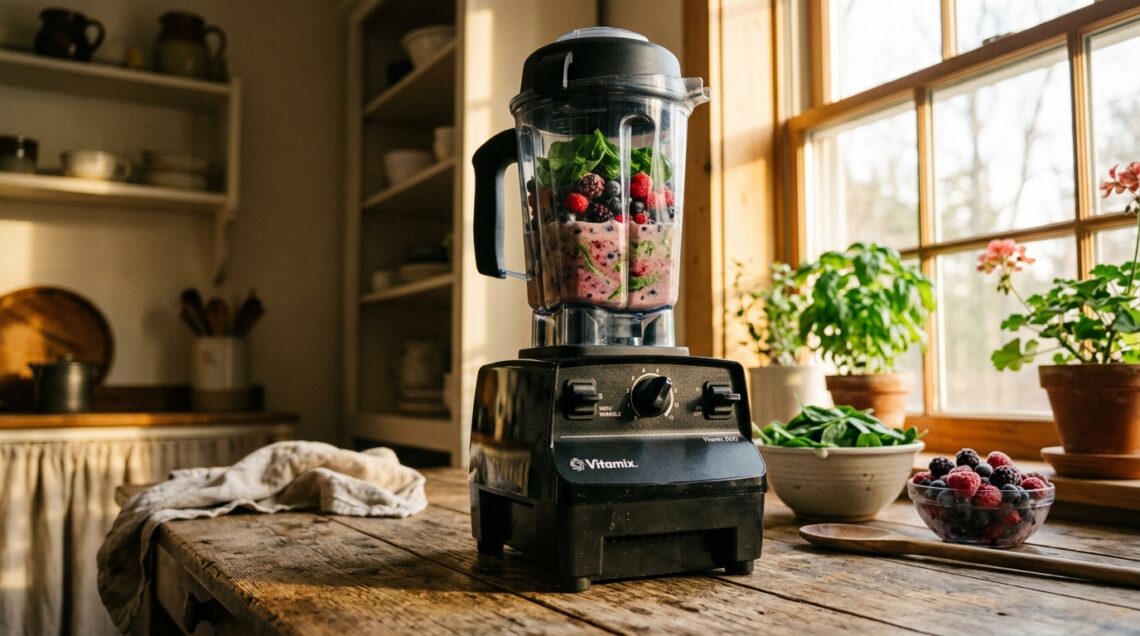
The Vitamix 5200 is a countertop blender built around a 2-horsepower motor, a 64-ounce BPA-free container, and laser-cut stainless-steel blades. It uses variable speed control along with a separate high-speed setting, adjusted through a dial rather than digital presets or pre-programmed settings, which is part of what gives it a more manual, hands-on feel compared to some newer blenders with automated blending programs.
It’s classified by Vitamix as part of their “Classic” or standard series, distinct from their more recently developed lines that include digital timers, programmed blending cycles, or touchscreen interfaces. The 5200 instead relies on a more straightforward mechanical approach: a dial to control speed, a switch for the high-speed setting, and a tamper tool designed to help move thick ingredients toward the blades during blending.
Key Features
2-Horsepower Motor
The 5200 is powered by a 2-peak-horsepower motor, which is intended to provide enough torque to process a wide range of ingredients, from soft fruit to fibrous vegetables, ice, and frozen produce, without stalling under load. This level of motor power is one of the more commonly cited distinctions between higher-capability blenders like this one and lighter-duty countertop models.
Laser-Cut Stainless-Steel Blades
The blades are made from hardened stainless steel and are not designed to be removed or sharpened, unlike some blenders with replaceable blade assemblies. Instead, the blade design relies on speed and motor torque rather than extremely sharp edges to break down ingredients, which is intended to reduce the need for blade maintenance over the life of the machine.
64-Ounce Container
The classic container holds 64 ounces, which is large enough to prepare multiple servings in a single batch — useful for families, meal prepping, or entertaining. The container’s shape is designed to create a vortex that pulls ingredients down toward the blades as the blender runs, which is intended to reduce the need for frequent stopping and stirring during a blend.
Variable Speed Control Plus High Setting
Rather than offering a fixed set of preset programs, the 5200 uses a dial that allows speed to be adjusted continuously at any point during blending, along with a separate switch for a high-speed setting. This setup is intended to give the user direct control over texture — running at a lower speed for a chunkier result, or moving up toward high speed for a fully smooth blend.
Tamper Tool
Included with the 5200 is a tamper, a long plastic tool designed to be inserted through the lid opening while the blender is running, used to push thick ingredients — like nut butter, frozen fruit, or dense smoothies — down toward the blades. This is particularly useful for recipes that don’t have enough liquid to create a vortex on their own.
Radial Cooling Fan and Thermal Protection
The motor base includes a radial cooling fan along with a thermal protection system designed to shut the motor off if it begins to overheat, which is intended to prevent damage during heavy or extended use. If this occurs, the general guidance is to let the unit rest for a period of time before resuming use.
Friction-Heat Soup Function
Because the blades can reach high rotational speeds, the friction generated during blending can raise the temperature of the ingredients inside the container. Vitamix notes that this can bring cold ingredients to a steaming-hot temperature in a matter of minutes, without needing a stove, which is commonly used to make blended soups directly in the container.
Self-Cleaning Function
Rather than needing to be disassembled for cleaning, the 5200 can be cleaned by adding warm water and a drop of dish soap to the container and running it at a high speed for roughly 30 to 60 seconds. This is intended to clean the interior of the container and the blade assembly without requiring the blades to be removed by hand.
Metal Drive System
The connection between the motor and the container’s blade assembly relies on a metal drive system rather than a plastic coupling, which is generally associated with better durability over repeated, heavy use compared to lower-cost plastic components.
How It Can Be Used
The 5200 is described by Vitamix as a general-purpose blending tool rather than one built for a single narrow task, and its practical use tends to reflect that. Common uses include smoothies and fruit or vegetable-based drinks, blended soups made using the container’s friction-heat capability, nut butters, batters for pancakes or baked goods, frozen desserts like sorbets or soft-serve style treats made from frozen fruit, salad dressings and sauces, non-dairy milks made from nuts or seeds, and finely ground flours from whole grains.
Because the container holds a full 64 ounces, it tends to work well for batch preparation — making a larger quantity of smoothie base, soup, or sauce at once, rather than blending single servings repeatedly. For households that meal-prep or cook for several people, this can reduce the number of times the blender needs to be run and cleaned over the course of a week.
The variable speed dial gives some flexibility in how ingredients are processed. Starting at a low speed and gradually working up to high is the general approach recommended for most recipes aimed at a smooth result, since this helps draw ingredients into the blades gradually rather than immediately subjecting them to full power. For chunkier results — like a coarse salsa or a lightly processed soup — stopping at a lower speed setting, or pulsing briefly, can preserve more texture.
The tamper is generally used for thicker mixtures that don’t have enough liquid to move on their own, such as nut butter, thick smoothie bowls, or frozen fruit-based desserts. Because the tamper is designed to be used safely with the lid on and the blender running, it allows these denser blends to be processed without needing to repeatedly stop and stir by hand.
Beyond its usual roles, some owners use the 5200 for less obvious tasks, like grinding coffee beans in small quantities, making bread or pizza dough, or processing cooked grains and vegetables into baby food. Its capability across such a wide range of textures and ingredient types is part of why it’s often described as a multi-purpose kitchen tool rather than a single-use smoothie maker.
Who It May Be Suitable For
People who blend frequently and across a range of recipes. Because of its price point relative to basic blenders, the 5200 tends to make the most sense for households that use a blender often — daily smoothies, regular soup-making, or frequent batch cooking — rather than occasional use a few times a month.
Anyone looking for a single blender to replace several kitchen tools. Given its ability to handle soups, nut butters, doughs, and frozen desserts in addition to standard smoothies, some people use the 5200 as a way to consolidate tasks that might otherwise require a food processor, ice cream maker, or dedicated soup pot.
Those who prefer manual control over automated presets. Because the 5200 relies on a dial and a high-speed switch rather than digital blending programs, it tends to suit people who want to adjust speed and texture themselves throughout a blend, rather than relying on a pre-set program to determine the outcome.
People preparing food for larger households or batch cooking. The 64-ounce container capacity is well suited to preparing multiple servings at once, which can be useful for families, or for anyone who prefers preparing smoothies, soups, or sauces in bulk for the week ahead.
Anyone who values long-term durability over the latest features. Because this model is part of Vitamix’s longer-running Classic series design, it appeals to people prioritizing a simpler, mechanically robust design with a long track record, rather than the newest programmable blending technology found in some other models.
Important Things to Consider
Manual operation requires some initial learning. Because there are no pre-programmed settings for specific recipes, achieving consistent results — a fully smooth smoothie, for instance — depends on understanding how to use the speed dial, when to use the tamper, and how long to blend for a given recipe. This typically becomes intuitive after regular use, but it does involve some trial and error at first.
Noise level. High-powered blenders in this class tend to be louder than smaller, lower-wattage models, particularly when running at high speed. This is generally a byproduct of the motor power needed to process tough ingredients, and it’s worth factoring in for households sensitive to kitchen noise, especially for early-morning use.
Counter space and container height. The container’s tall, narrow shape means the assembled blender has a notable vertical footprint, which is worth checking against available counter and cabinet clearance before purchase.
Minimum ingredient volume. Vitamix blenders, including the 5200, generally require a minimum quantity of ingredients to blend effectively, since the blades need to be sufficiently covered to create proper circulation. Very small quantities may not blend as evenly as larger batches.
No digital presets. For anyone who prefers a “set it and forget it” experience with programmed cycles for specific tasks like smoothies or soups, the 5200’s manual dial-and-switch design may feel like a step down in convenience compared to some other blenders in the Vitamix lineup that include digital programs.
Maintenance and troubleshooting. While the blades themselves are not designed to be sharpened or replaced under normal circumstances, the machine does include a thermal protection system that will shut the motor off if it overheats — generally following heavy or extended use. If this happens, the manufacturer’s general guidance is to let the unit cool down before resuming use.
Warranty coverage. The 5200 is generally sold with an extended warranty period compared to many countertop appliances, which is worth confirming directly with the seller or manufacturer at the time of purchase, since coverage terms and length can vary depending on where and when the unit is purchased.
Comparison of General Categories
Rather than comparing specific competing blender brands, it helps to understand where the 5200 fits among the broader categories of blending equipment:
Basic countertop blenders are generally less expensive and more compact, suited to occasional use like blending drinks or crushing ice. They tend to have less powerful motors, which can make them less effective with fibrous vegetables, frozen ingredients, or very thick mixtures.
High-powered manual-control blenders — the category the 5200 belongs to — combine a powerful motor with straightforward dial-based speed control, without digital presets or programmed cycles. This tends to suit users who want strong, consistent blending performance and are comfortable adjusting speed and blend time themselves.
High-powered blenders with digital programs offer similar motor power but add pre-set programs for specific tasks — smoothies, soups, self-cleaning cycles, and so on — often controlled through a digital interface or touchscreen. These tend to prioritize convenience and consistency for standard recipes, generally at a higher price point, in exchange for less manual control over the blending process itself.
Personal or single-serving blenders are built around smaller containers, often designed for blending and drinking from the same cup. These are typically more compact and convenient for single servings but lack the batch capacity and overall motor power of larger countertop models.
Where a specific kitchen lands among these categories generally comes down to batch size needs, whether programmed convenience or manual control is preferred, and how frequently the blender will be used for more demanding tasks like soups, nut butters, or frozen desserts.
Frequently Asked Questions
Can the Vitamix 5200 make hot soup without a stove? Yes. Because the blades can reach high rotational speeds, the friction generated during blending can heat ingredients to a steaming-hot temperature within several minutes, which is commonly used to prepare blended soups directly in the container.
Does it come with a tamper, and what is it used for? Yes, a tamper is included. It’s a tool designed to be inserted through the lid opening while the blender runs, used to push thick or dense mixtures — like nut butter or frozen fruit — down toward the blades when there isn’t enough liquid to create natural movement.
How is the container cleaned? The container can generally be cleaned by adding warm water and a drop of dish soap, then running the blender at high speed for around 30 to 60 seconds, without needing to remove or disassemble the blade assembly.
Does the 5200 have programmed settings for specific recipes? No. Unlike some other models in the Vitamix lineup, the 5200 uses a manual variable speed dial along with a separate high-speed switch, rather than digital presets or automated blending programs.
Is the container dishwasher-safe? Many Vitamix containers, including those used with the 5200, are generally dishwasher-safe on the top rack, though hand-washing using the self-cleaning method is also commonly used and tends to be faster for everyday use. It’s worth checking the specific care instructions included with the unit.
What happens if the motor overheats during use? The 5200 includes a thermal protection system designed to shut the motor off automatically if it begins to overheat, generally after heavy or extended use. The general guidance in this situation is to turn the unit off and allow it to rest before using it again.
Can it be used for tasks other than smoothies, like grinding grains or making dough? Yes, in addition to smoothies and soups, the 5200 is commonly used for tasks like making nut butters, batters, non-dairy milks, and finely ground flours, and some users also use it for tasks like kneading dough or grinding small quantities of coffee, depending on the recipe.
Conclusion
The Vitamix 5200 represents a fairly specific category of kitchen appliance: a high-powered, manually controlled blender built around a large-capacity container, a durable metal drive system, and a design that has remained largely unchanged for years. Its appeal generally comes from a combination of raw blending capability — handling everything from smoothies to hot soups to nut butters — and a straightforward, hands-on control scheme that doesn’t rely on digital presets.
Whether this particular blender fits a given kitchen depends largely on how often it would be used, whether manual speed control or programmed convenience is preferred, and how much value is placed on batch capacity and long-term durability. For households that blend frequently and want a single tool capable of handling a wide range of tasks, this category of blender tends to be a practical fit; for lighter or more occasional use, it may be worth comparing against smaller or less powerful alternatives as well.